Chemical splash: rinse now
If a chemical such as acid, alkali, lime, pesticide or cleaning agent enters the eye, immediately rinse with plenty of clean, gently running water for at least 15 minutes. Keep rinsing while arranging urgent medical care. Do not delay rinsing to look for a special solution or to contact the clinic first.
Take the product container or its name with you if it is safe to do so. Seek urgent eye care after rinsing.
Other eye injuries
- Do not rub or press on the eye.
- Do not try to remove an embedded object.
- Do not apply home remedies or unprescribed drops.
- If needed, loosely shield the eye with a clean protective cover without pressure.
- Seek urgent medical care after any penetrating injury, high-speed impact, severe pain or sudden vision change.
Common injury types
Injuries may involve a corneal scratch, blood in the front of the eye, a foreign body, an open-globe injury or an orbital fracture. Fireworks, farm work, workshops and road accidents can cause serious injuries. Do not try to diagnose severity from appearance alone; contact the clinic or seek urgent care.
Assessment and treatment
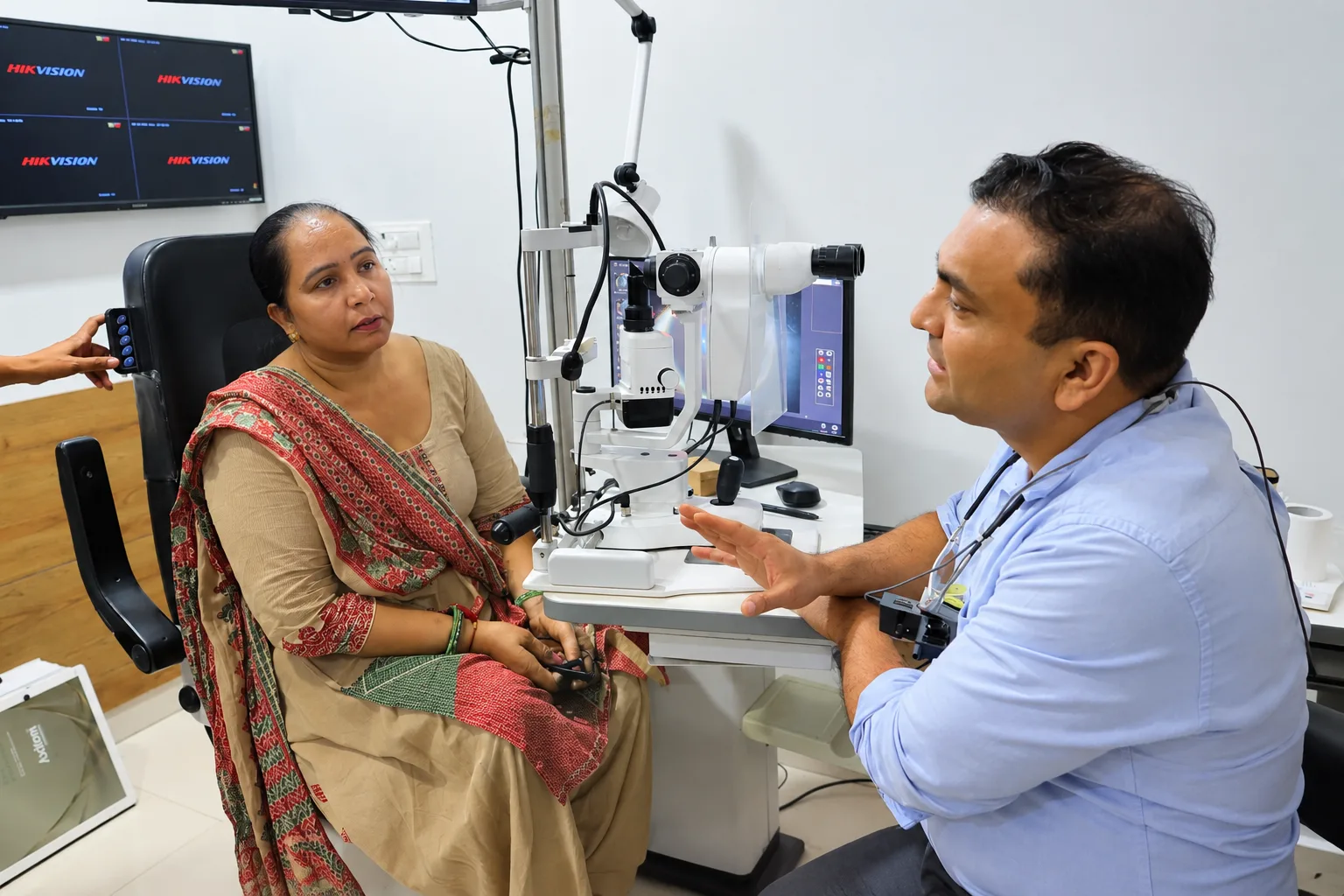
The clinician checks the type and severity of the injury and decides what examination or treatment is safe. Do not wait for a routine appointment when an injury may be serious. If something is stuck in or protruding from the eye, do not touch it; protect it from pressure and get emergency care.
Why apparently small injuries still need attention
The seriousness of an eye injury is not always obvious from the size of a mark on the outside. A particle moving at high speed can cause a small entry wound with deeper damage. A blunt impact may affect structures inside the eye even when there is little visible bleeding. Pain, reduced vision, light sensitivity, double vision or a change in the shape of the pupil should not be dismissed because the accident seemed minor.
The safest next step depends on what happened. Tell the treating team about the object, the force, protective eyewear and the time of injury. If there was grinding, drilling, hammering metal, breaking glass or an explosion, say so clearly. Do not use a website message as the only way to seek help for an urgent injury. Arrange prompt professional assessment through an appropriate eye-care or emergency service.
Responding to chemical exposure
Start rinsing a chemical splash immediately with plenty of clean running water. Continue for at least 15 minutes while arranging urgent medical care, and follow emergency-service advice. Do not delay rinsing while searching for a particular solution or medicine. Keep the eyelids open as comfortably as possible so water can reach the eye. If contact lenses are present, remove them if this is easy during rinsing, but do not delay irrigation trying to do so.
Do not attempt to neutralise one chemical with another, and do not put household remedies into the eye. If it can be done safely, take the product container or a photograph of its label to the treating team. Cleaning products, agricultural chemicals, industrial substances and cement-related material can all be relevant. Even if discomfort improves after rinsing, urgent assessment is still important because the extent of damage cannot be judged from comfort alone.
Foreign bodies, scratches and penetrating injuries
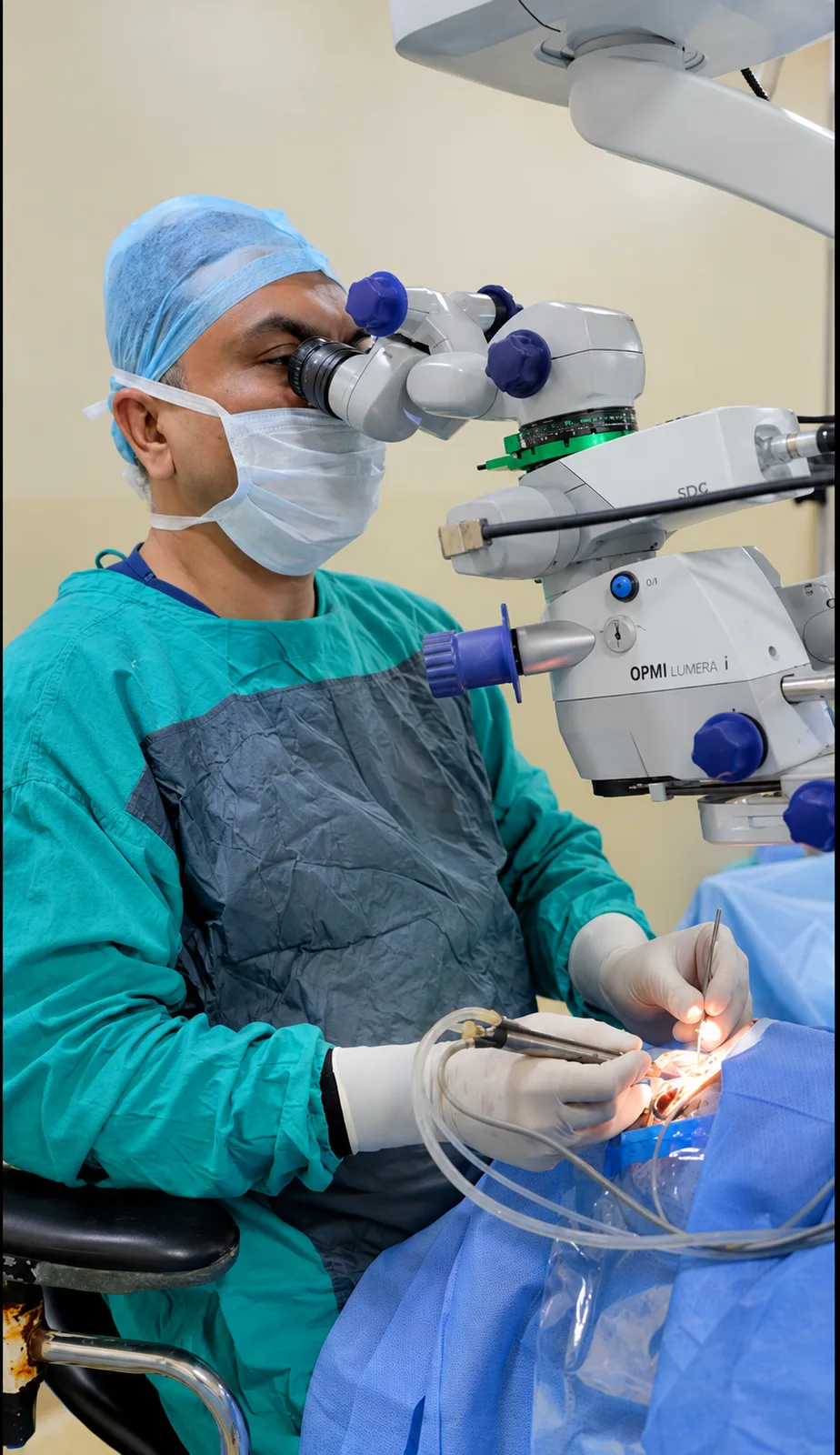
A loose surface particle and an object stuck in the eye are different situations. Do not dig at the eye with a finger, cloth, pin or cotton bud. Do not try to remove an embedded object. If penetration is possible, avoid pressing on the eye or applying a tight patch, and seek urgent medical help. The emergency team can advise how to protect the eye during transport without putting pressure on it.
Symptoms such as watering, a gritty sensation and pain can occur with a surface scratch, but the same symptoms may accompany other problems. Only an examination can establish the cause. Avoid using leftover antibiotic, steroid or numbing drops without professional instructions. Some medicines can mask a problem or be harmful in the wrong situation. Do not wear contact lenses in an injured or painful eye until the treating professional says it is safe.
Blunt injury, sport and road accidents
An impact from a ball, fist, fall or road accident may affect the eyelids, eye socket or structures inside the eye. Double vision, difficulty moving the eye, severe headache, vomiting or reduced vision can be important symptoms. Other injuries may need attention at the same time. If a road accident or serious fall has occurred, use an emergency service capable of assessing the wider injury rather than focusing only on the eye.
Do not rub or massage an injured eye. Avoid assuming that an ice pack or pain medicine is enough when vision has changed. Tell the clinician if you take blood-thinning medication, but do not stop it without advice. The examination may need to be repeated as swelling settles or to check for delayed complications. Ask specifically what new symptoms should prompt an earlier return.
What the clinical assessment may involve
The team may check vision in each eye, pupil responses, eye movements and the front and back of the eye where safe. Particular tests or imaging may be needed depending on the injury. Not all examinations are appropriate if the eye may be open or unstable, so allow the clinician to decide the sequence. Tell staff before any scan if a metal fragment may be involved.
Be ready to describe earlier eye conditions, operations, allergies, medicines and the time of your last meal if surgery might be considered. The clinician may also ask about vaccination history where relevant to a wound. Do not take someone else's antibiotics or assume that an old prescription applies. The correct treatment and urgency depend on the actual findings, including the possibility of infection, internal damage or an injured eyelid or tear-drainage structure.
Treatment decisions and follow-up
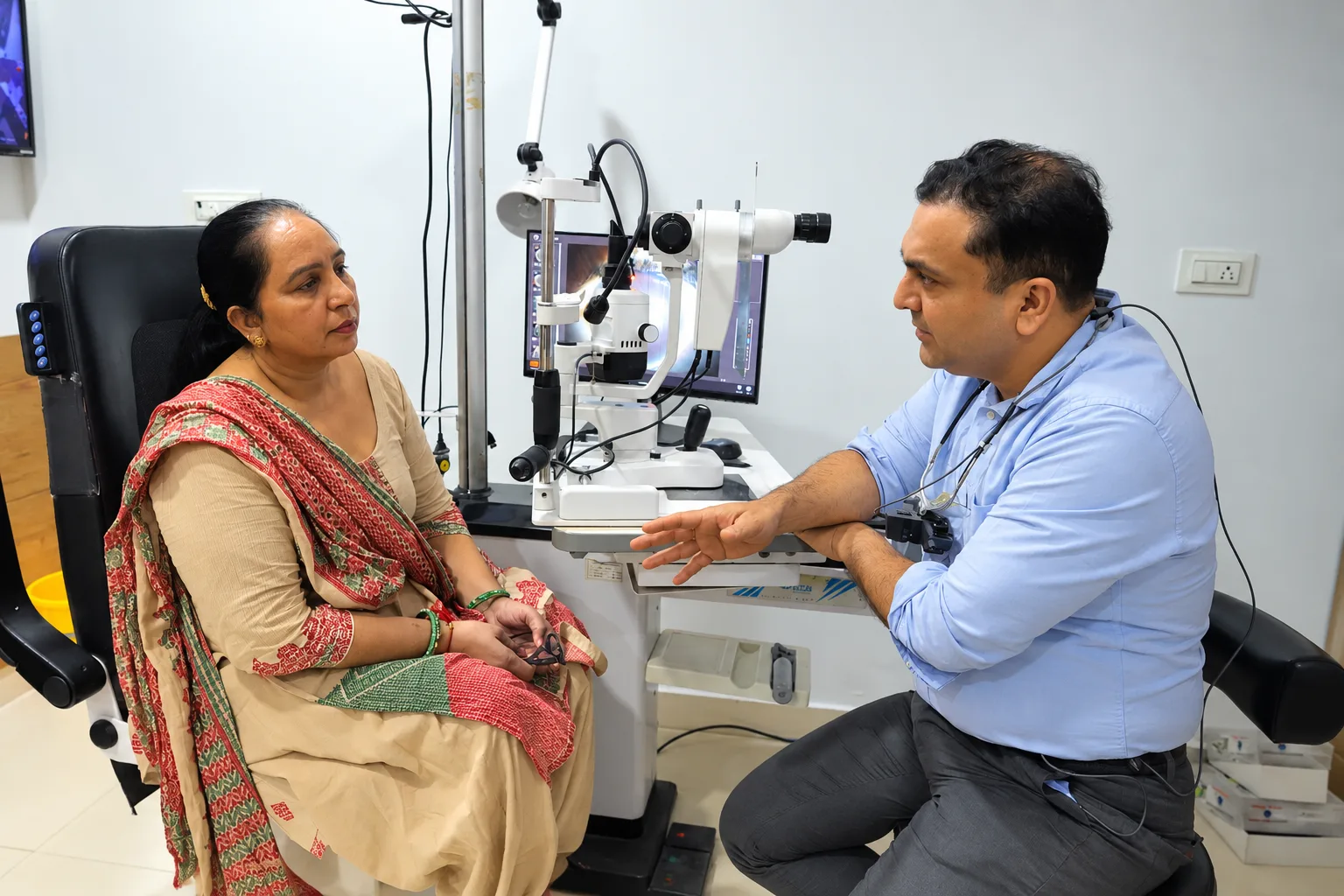
Management can range from observation and prescribed medicines to removal of a foreign body or an operation. The purpose may be to close a wound, control infection or address a particular damaged structure. This page does not establish what a specific patient needs, and it does not confirm that every emergency procedure is available at the clinic. The treating team should explain if referral to another centre is necessary.
Attend follow-up even when pain improves. Some complications appear later, and an early improvement does not prove that the retina, pressure or other structures are unaffected. Follow instructions about drops, protection, activity and work. Ask for a written plan, including what to do if vision worsens or discomfort returns. Do not restart contact lenses or return to hazardous work before you have appropriate advice.
Prevention at home and at work
Use protective eyewear designed for the task, not simply ordinary spectacles, during activities involving flying fragments or chemical splashes. The correct protection may differ for grinding, welding, handling chemicals and sport. Employers should provide suitable equipment and training. Check that eyewear fits and is maintained properly. Keep chemicals in their original labelled containers and store them away from children.
Fireworks, agricultural work and home repairs can create seasonal or occasional risks even for people who do not usually do hazardous work. Plan protection before starting, and keep bystanders at a safe distance. If an injury happens, do not let embarrassment or the pressure to finish a task delay assessment. A clear description of the accident helps the clinician make safer decisions.
Helping someone reach care safely
Someone with reduced vision should not drive themselves. Arrange a responsible accompanying person or emergency transport according to the seriousness of the situation. Bring relevant product labels, medical records and a medicine list if these are readily available, but do not delay urgent care collecting paperwork. During chemical exposure, immediate rinsing takes priority. During a suspected penetrating injury, avoiding pressure and obtaining urgent help are essential.
Recovery and long-term vision vary greatly with the type and severity of damage. No outcome can be promised from a photograph or a telephone conversation. Use this information to recognise urgency and avoid harmful first-aid actions, not to replace a clinical examination. For an immediate emergency, contact an appropriate emergency service rather than waiting for the website's appointment system.
Planning a safe return to activities
Ask the treating clinician when work, sport and contact lenses can be resumed, and whether additional protection is needed. The answer depends on the injured structures and the progress of healing, not simply the number of days since the accident. Where appropriate, obtain written restrictions for an employer or school. Review what caused the injury before returning to the task so protective equipment and working methods can be improved. Do not test recovery by deliberately repeating an activity that could expose the eye to another impact or chemical splash.
Frequently asked questions
Should I rinse a chemical splash with water?
Yes. Start rinsing immediately with plenty of clean running water for at least 15 minutes and seek urgent care.
Can I remove a small object myself?
Do not attempt to remove an embedded or stuck object. Avoid rubbing and get prompt medical help.
Should I put pressure on an injured eye?
No. Avoid rubbing or pressure. A clean shield may be placed loosely if needed, without pressing on the eye.
What if something is stuck in the eye?
Do not pull it out or touch it. Protect the eye from pressure and seek emergency medical care.
Should I wait if the injury looks minor?
Serious damage may not be visible from outside. Seek prompt assessment after an eye injury, especially with pain or vision changes.
What should I do after a fireworks or work-related injury?
Do not rub or apply home remedies. Protect the eye without pressure and get urgent medical assessment.
This first-aid summary is not a substitute for emergency medical care. The clinic should have its doctor approve the exact wording before publication.
Contact the clinicCall +91 95014 43977WhatsApp
Clinical review and review date: confirm with the clinic before publishing this information.